


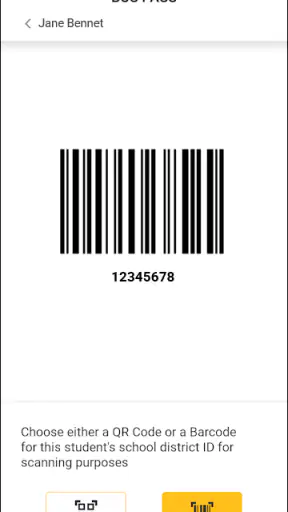
Getting a child to the bus stop at the right moment sounds simple until the morning includes a missing shoe, a delayed breakfast, and a bus schedule that does not quite match reality. Here Comes the Bus is an education app built around reducing that uncertainty. I found its main appeal in the gap between a printed timetable and what a family actually needs: a practical indication of when to leave home and when the bus should arrive.
My experience with it is best described as useful rather than magical. It does not replace a parent’s judgment, and it cannot remove every transport problem, but it can make school mornings more predictable. The app is free, aimed at everyone, and developed by CalAmp Student Safety, formerly known as Synovia. It has been available since April 3, 2015, and its current version is 4.0.6, with support for Android 7.0 and later.
How I used it in a normal school morning
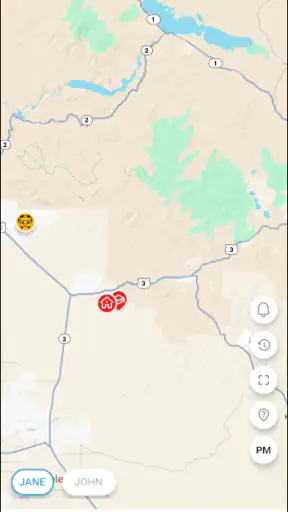
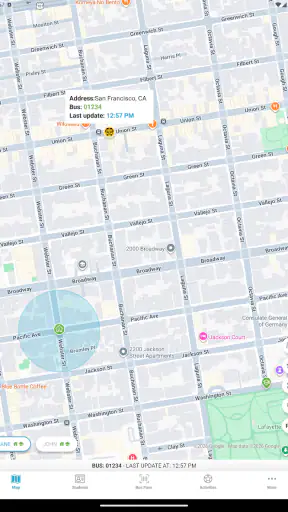
The most sensible way to use Here Comes the Bus is to treat it as a quick morning check, not as something that needs constant attention. I would open the app before getting the child ready, check the bus’s position or expected arrival information, and then decide whether there was time for breakfast, a coat, or a calmer walk to the stop. That small change matters because it turns the bus schedule into a decision tool rather than a fixed number to obey blindly.
A realistic example is a family whose stop is a short walk away but whose child should not wait outside alone for a long period. On a normal day, the parent can check the app while packing a school bag. If the bus appears to be approaching, the family leaves promptly. If it is still farther away, they can finish preparing indoors. The benefit is not simply knowing where the vehicle is; it is being able to connect that information with the child’s routine.
I also found that the app works best when the household agrees on one simple rule: the app helps decide when to leave, but the child still follows the usual safety routine. That means having shoes and belongings ready, using the established route to the stop, and not rushing across a street because a bus marker appears nearby. Live information is helpful, but it should never encourage unsafe behavior.
That distinction is important for younger children. A parent may use the app directly while the child only follows the family’s normal instructions. Older students may be able to understand the timing themselves, but I would still avoid making the app the only source of information. A phone battery can run low, a connection can be unreliable, and transport information can change. Here Comes the Bus is strongest as one part of a repeatable plan.
The app’s education focus also makes it different from a general map application. A map is usually designed to help someone navigate from one place to another. Here Comes the Bus is more narrowly concerned with school transportation and the timing around it. That narrower purpose is a strength for families who need bus-stop awareness, even though it means the app is less useful for planning a complete journey across different forms of transport.
What the first setup should accomplish
The first useful session should be about making the app easy to check later. I would take time to identify the correct student or bus information available in the account and confirm that the selected stop is the one the child actually uses. This is a small but important habit: a beautifully timed alert or map view is not helpful if it is connected to the wrong route or stop.
I would also check the app at a quiet moment rather than during the first rushed morning. That gives the parent time to understand the screen, recognize the relevant arrival information, and see how the service represents the bus. Once the household knows where to look, the daily check becomes much faster.
Another practical habit is to compare the app with the family’s existing routine for several mornings. I would not immediately change the leaving time after one unusual result. Instead, I would notice whether the information generally gives enough time to walk to the stop and whether the bus tends to arrive earlier or later than expected. This is not about inventing a personal timetable; it is about learning how much margin the household needs.
The best workflow is a short check followed by a clear household decision. If everyone knows what the result means, the app reduces discussion. Without that agreement, a parent may see the bus information but still spend several minutes explaining whether the child should leave, wait, or search for a missing item.
Settings and routines worth checking
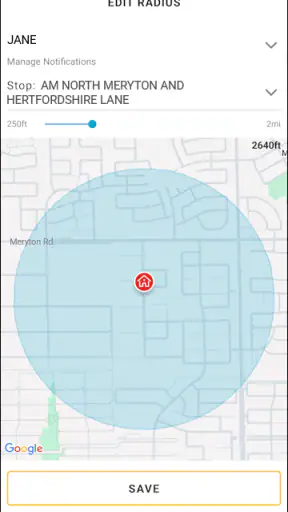
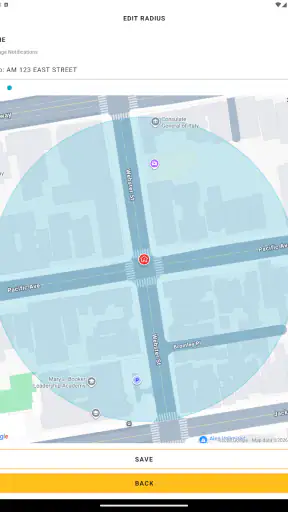
Experienced use starts with reviewing the available account and notification choices instead of accepting every option without thought. I would look for the settings that control which student, stop, or route is being followed and make sure the information matches the child’s current school arrangement. Families with more than one child should be especially careful here, because the most useful screen is the one that answers the immediate question without extra searching.
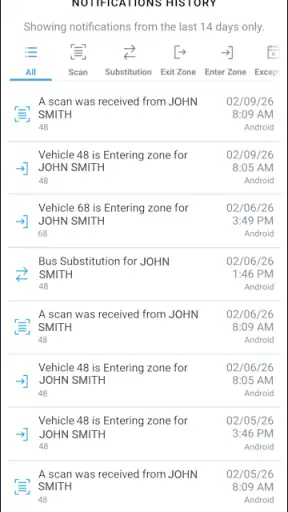
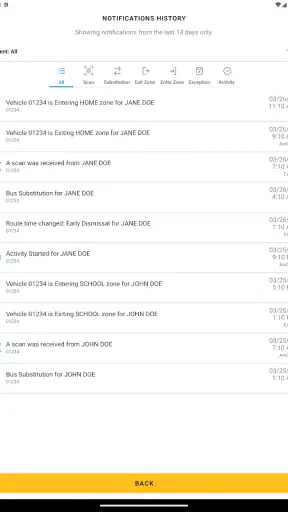
Notifications deserve a practical review as well. A parent who wants a quiet phone may prefer to open the app manually at a regular point in the morning. Another household may benefit from receiving an arrival-related prompt so that nobody has to remember to check. The right choice depends on how predictable the family’s routine is. More notifications are not automatically better; they can become background noise and make the important message easier to overlook.
I would also consider who should be responsible for checking the information. If two adults share school duties, agreeing that either person can perform the morning check avoids the common problem of both assuming the other person has done it. If an older child uses the app, the parent should still establish what happens when the displayed timing looks unusual.
One useful approach is to keep a simple backup routine beside the app. That might mean knowing the usual stop time, keeping the school’s contact details accessible, and having a plan for a missed bus. Here Comes the Bus can improve awareness, but it is not a substitute for knowing what the family should do when the bus has already passed or the displayed information does not match what is happening outside.
Privacy and device habits also matter in everyday use. I would avoid leaving the app open where another child can casually change the selected information, and I would make sure the phone used for checks is normally charged before the school day begins. These are not exciting features, but they are the kinds of details that determine whether a family actually benefits from a transport app.
Faster patterns for busy mornings
Once the basics are working, the fastest pattern is to place the check at a fixed point in the morning. For example, a parent could look after the child is dressed but before breakfast is cleared away. That timing gives the family a meaningful choice: leave now, finish one task, or allow a little more preparation time. The exact point will differ by household, but consistency is more valuable than repeatedly checking at random.
I would avoid opening the app every few minutes. That creates the impression of control without necessarily improving the decision. A single check at the right time is often more useful than several anxious checks, especially when the stop is close enough that the information will not change the family’s safe walking plan very much.
Another efficient pattern is to prepare everything that does not depend on the bus before checking it. Coats, bags, shoes, and permission forms should be ready first. Then the app can answer the final timing question instead of becoming part of a long preparation process. This is a subtle but valuable trade-off: the app works better when it is used to adjust a finished routine, not when it is expected to organize the entire morning.
For families managing different school schedules, I would check each child’s information separately and keep the order consistent. Start with the child who must leave first, then move to the later departure. That reduces the chance of acting on the wrong arrival detail when the household is busy. The app’s value comes from clarity, so any personal habit that prevents mix-ups is worth keeping.
It is also wise to build in walking time rather than treating the displayed arrival as the moment to step outside. If the stop takes several minutes to reach, the family should leave before the bus is due. The app can help estimate urgency, but it does not know whether a child needs extra time to put on a coat, whether a crossing is busy, or whether an adult must accompany them.
Where the app is genuinely helpful
Here Comes the Bus is particularly useful for parents who have a variable morning schedule, children who dislike waiting outside, or stops where the bus’s arrival is difficult to judge from a printed schedule. It can also help when a child is transitioning to a new school routine and the family is still learning how much time the walk and preparation require.
I see a strong use case for households where one adult leaves for work while another handles the school run. The person at home can check the bus without needing to call the other adult for an update. That reduces interruptions and makes responsibility clearer. It is a modest convenience, but repeated every school day, those small reductions in uncertainty add up.
The app may also be useful when weather makes waiting less pleasant. A family can use the arrival information to avoid sending a child to the stop unnecessarily early, while still leaving enough time to arrive safely. I would not use that as a reason to cut the timing too closely, but it is a sensible way to make a cold or wet morning more manageable.
Its free price makes experimentation easy, and the scale of its audience suggests that it is not an obscure niche tool: it has passed one million installs, with an average rating of 3.4 from around twenty thousand ratings and about nine thousand reviews. I would read those figures as a sign of mixed but substantial real-world use rather than as proof that every family will have the same experience.
The age rating of Everyone is appropriate for a family-oriented education app, although the practical responsibility still belongs with the adult supervising the child’s travel. A child-friendly rating does not mean a child should independently interpret every transport update or make hurried decisions at a roadside.
Limits I noticed and when another option is better
The first limitation is that a bus-tracking tool cannot solve problems that happen outside the information it displays. If the family needs detailed walking directions, traffic-aware driving guidance, or a complete public-transport journey, a general mapping app may be a better companion. Here Comes the Bus has a focused job, and its focus is also what prevents it from replacing broader travel tools.
I would also be cautious about relying on it for exact, second-by-second timing. A displayed location or arrival estimate should be treated as guidance, not a guarantee. The final approach to a stop can be affected by traffic, boarding time, weather, and other ordinary delays. Families that live close to the stop should keep enough margin to avoid turning a small change into a missed bus.
The app is not the right choice for someone who wants a full family calendar, automatic school reminders, or a detailed record of every part of a child’s day. Those needs call for a calendar, a school communication platform, or a broader family organization tool. Installing this app will not make those other tasks disappear.
Its usefulness can also depend heavily on the quality of the local transport information connected to the account. If the route or stop details are not current, the parent may need to confirm the arrangement through the school or transport provider rather than repeatedly refreshing the app. That is not a reason to dismiss it, but it is a reason to verify the basics before trusting the routine.
The average rating of 3.4 reflects that this is not a universally smooth experience. In my view, that makes it important to judge the app by the problem you need solved. If your main concern is knowing whether the school bus is approaching, it may be worthwhile. If you expect flawless predictions, broad navigation, or a polished replacement for every school communication channel, you may find it limiting.
What experienced users should remember
My strongest recommendation is to create a three-part habit: prepare first, check once at a meaningful time, and leave with a safety margin. This avoids both extremes—ignoring the app and watching it obsessively. It also makes the information easier for a child to understand because the family’s response stays consistent.
I would revisit the selected student and stop whenever the school arrangement changes, not only when the app appears to behave differently. A child moving between households, changing schools, or using a different stop can make yesterday’s setup unsuitable. Treating the account as something that needs occasional housekeeping is more reliable than assuming it will always reflect the family’s current plan.
For shared caregiving, the useful shortcut is not a technical trick but a clear division of responsibility. Decide who checks on ordinary days and who takes over when that person is unavailable. This prevents a notification from being seen by one adult while everyone else assumes the situation is already handled.
Finally, keep the app in perspective. It can tell you when the bus is getting close, but it cannot decide whether the child is dressed warmly, whether the route to the stop is safe today, or whether the child is ready to wait independently. The parent still supplies the judgment that turns transport information into a safe routine.
My verdict after making it part of a routine
Here Comes the Bus is a focused education app that earns its place when the daily problem is uncertainty around a school bus. I like it most as a quick timing aid: check the relevant information, adjust the morning, and avoid sending a child to wait far earlier than necessary. Its free availability and broad device compatibility make it easy for families to try, while its focused design keeps the purpose understandable.
I would recommend it to parents who want more practical awareness than a fixed timetable provides, especially when a child’s stop is close enough that waiting time matters. I would not recommend treating it as an all-purpose travel planner or as a promise of exact arrival times. A backup plan remains sensible, and safe walking habits matter more than any screen.
After using it with that mindset, I see the app as a useful layer between the school bus schedule and real family life. It is most effective when combined with prepared bags, agreed responsibilities, sensible notifications, and a little extra time. If that is the kind of help you need, Here Comes the Bus is worth trying. If you need complete navigation or broader school organization, choose a different tool and keep this one only if its bus timing solves a specific daily frustration.


